From Concept Art to Final Cut: The Untold Pipeline of Digital Effects in Contemporary Cinema
Henrik Bauer · Sep 25, 2026
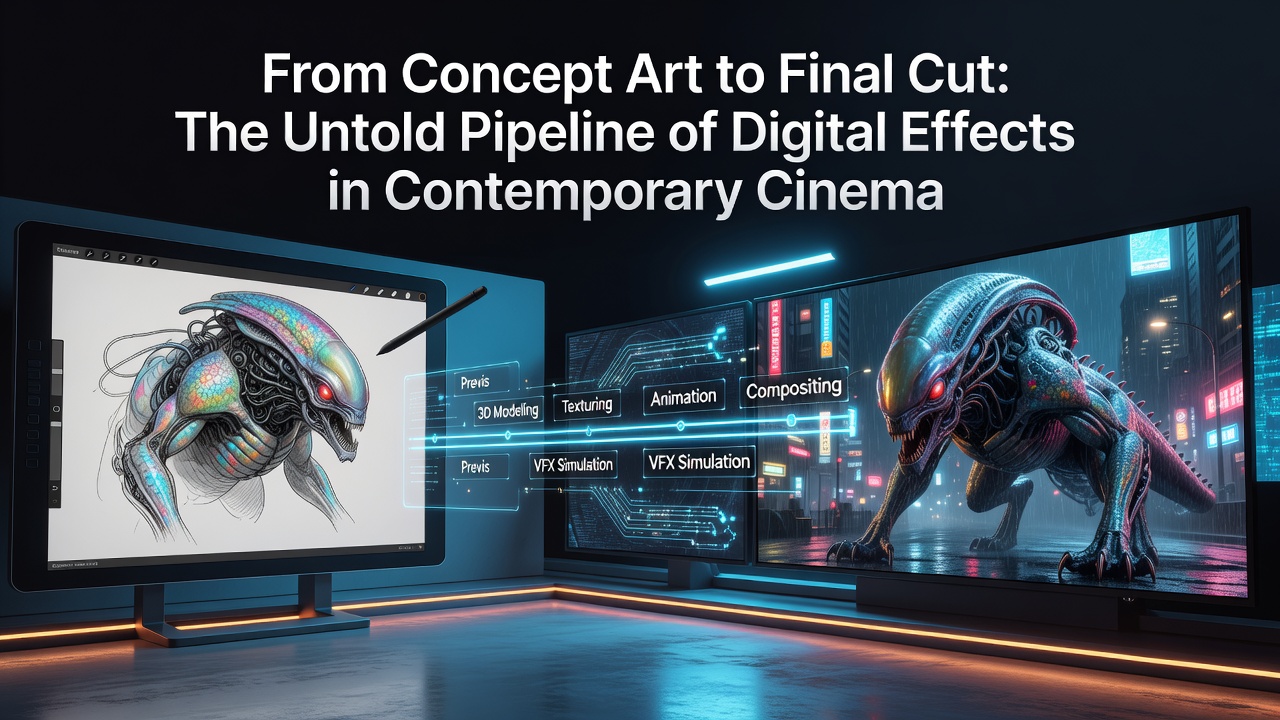
From Concept Art to Final Cut: The Untold Pipeline of Digital Effects in Contemporary Cinema
Contemporary cinema relies on a structured sequence of stages that transform initial ideas into finished visual effects sequences, and this process begins long before cameras roll on set. Studios assign teams of artists and technicians who move through concept art creation, previsualization, modeling, animation, rendering, and compositing, with each phase building directly on the previous one to maintain consistency across shots.
Early Development and Concept Work
Production starts when directors and production designers commission concept artists to generate sketches and digital paintings that establish the look of environments, creatures, and props, while these images serve as reference points for all subsequent departments. Artists use software such as Photoshop and ZBrush to iterate on designs, and feedback loops between the director and art department refine details until the approved concepts align with the script requirements. Data from industry reports indicate that major releases allocate several months to this phase alone, allowing teams to address technical challenges early rather than during later stages.
Previsualization and Planning
Once concepts receive approval, previsualization artists construct rough 3D animatics that map out camera movements and timing, and these low-resolution versions help cinematographers and editors plan live-action shoots around planned digital elements. Teams employ tools like Maya or specialized previs software to block out sequences, which reduces costly reshoots on set because directors can preview how effects will integrate with practical footage. Observers note that this stage often overlaps with location scouting, since virtual environments must match real-world lighting and scale measurements collected on site.
Asset Creation and Technical Execution
Modeling teams then convert approved concepts into detailed 3D geometry using programs such as Maya and Houdini, and texture artists apply surface details that respond realistically to simulated light. Rigging specialists add control systems that allow animators to move characters or objects without distortion, while simulation artists handle elements like cloth, water, and particle effects that behave according to physics calculations. As of September 2026, productions for several high-profile releases continue to incorporate real-time rendering previews that let supervisors review progress without waiting for final frame computations, which shortens overall timelines compared with earlier decades.
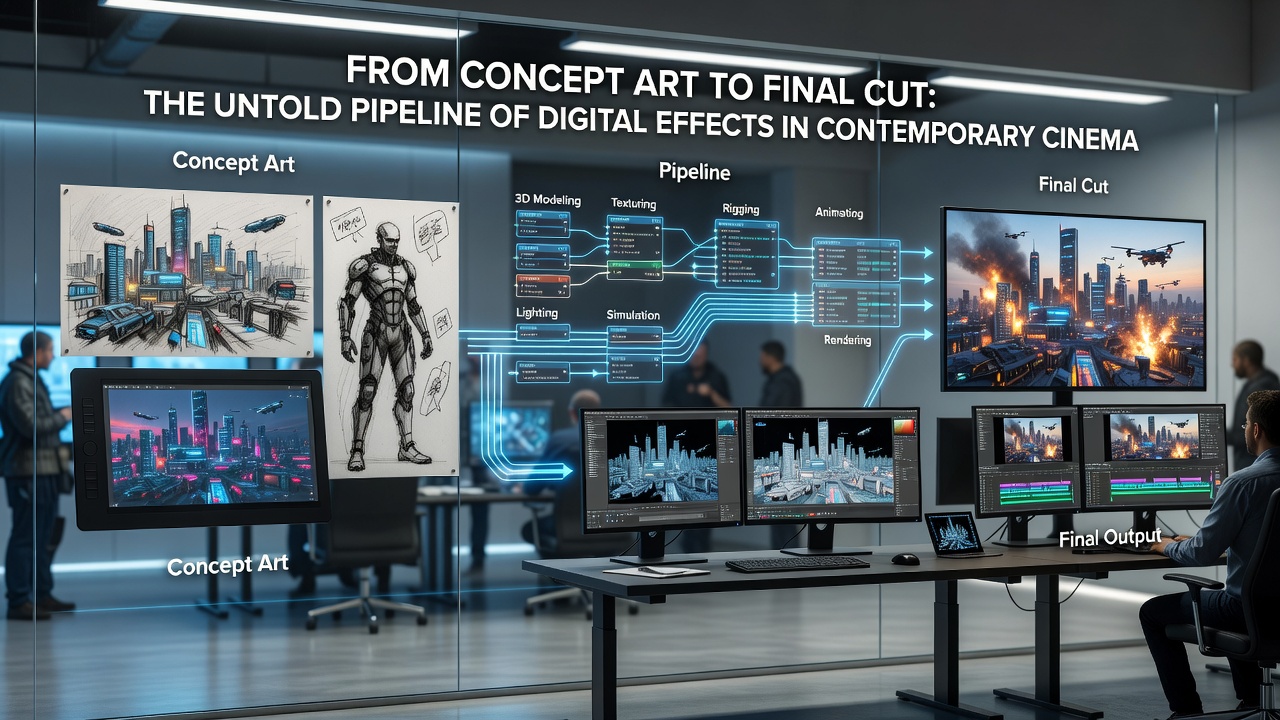
Lighting and rendering departments calculate how light interacts with surfaces across thousands of frames, and render farms distribute these calculations across networked computers to produce the individual layers that compositors later combine. Compositing artists use Nuke or similar node-based software to merge rendered elements with live-action plates, adjusting color, adding atmospheric effects, and ensuring seamless integration at the pixel level. Research from academic sources such as the ACM SIGGRAPH proceedings shows that modern pipelines handle increased data volumes through procedural generation techniques that automate repetitive tasks while preserving artistic control.
Integration and Final Delivery
Once all layers reach the edit suite, colorists apply final grading that unifies the visual tone across practical and digital footage, and sound designers synchronize effects with the audio mix during the final cut stage. Delivery specifications vary by distributor and exhibition format, yet teams must generate multiple versions that account for different aspect ratios and dynamic range standards used in theaters versus streaming platforms. Figures from the Visual Effects Society reveal that a single feature film can involve contributions from hundreds of artists distributed across multiple facilities worldwide, which requires standardized file formats and review protocols to maintain continuity.
Conclusion
The pipeline from concept art through final cut represents a coordinated sequence of specialized tasks that studios have refined over successive productions, and each advancement in software or hardware influences how teams allocate time and resources. Continued development of real-time tools and collaborative platforms suggests that future releases will further compress certain stages while expanding the scope of what remains achievable within a single film project.